Leaving the UK With Property (2026): Sell, Keep, or Rent It Out?
When you leave the UK with property, decide based on cashflow resilience, tie risk, and future plans. Selling creates clarity and reduces admin. Keeping can preserve optionality but concentrates risk in GBP and UK policy. Renting only works if the numbers survive voids, repairs, and rate rises. UAE expats should also plan currency and estate execution.
At a glance
- Define the job of the property: home base, investment, or optionality.
- Stress-test rental cashflow with voids, repairs, and rate shocks.
- Treat the property as a leveraged GBP position once you earn AED.
- Confirm mortgage terms, insurance, compliance, and agent capability.
- Plan tax mechanics and reporting before the first rent payment.
- Avoid “accidental landlord” decisions driven by emotion.
- Build a clean exit plan if you keep it and later need to sell.
- Align estate planning, access, and liquidity for cross-border execution.
- Set review cadence and triggers for relocation, repatriation, and rates.
People Also Ask
- Should I sell my UK property before moving to the UAE?
- Can I rent out my UK home while living abroad?
- How does the Non-Resident Landlord Scheme work?
- Do I pay UK tax on rental income if I live overseas?
- What are the biggest risks of being an expat landlord?
- How does currency affect keeping a UK property when you earn AED?
Leaving the UK with property (2026): the decision that drives everything else
If you are leaving the UK in 2026, the property decision is rarely just about property.
It affects your tax profile, your cashflow resilience, your currency exposure, your mental load, and your ability to move again or return home without friction.
I’m Josh, a financial planner specialising in expats in the Middle East. What I see in practice is that most expats do not make a single clear property decision. They drift into one. They become accidental landlords, or they hold on to a home base “for safety”, then discover they have built a highly leveraged, admin-heavy GBP position while their life becomes AED and USD-linked.
Balanced judgement upfront: there is no universal best answer. Selling can be the cleanest move. Keeping can be the smartest long-term play. Renting can work, but only if the numbers survive a stress test and you treat it like a business.
This guide gives you a framework you can run, with worked examples, checklists, and the real failure modes that show up for UK expats.
Sell, keep, or rent: the property decision framework for UK leavers
You are choosing between three outcomes:
- Sell: convert property into liquid capital and reduce complexity.
- Keep vacant: preserve a UK base and optionality, but pay for it.
- Rent it out: keep the asset and try to make it self-funding.
Most people only compare these options at today’s interest rate and today’s rent.
That is not enough.
You need to compare them under stress and under your most likely future life paths.
The first question: what job does the property do?
Before you touch tax, agents, or spreadsheets, decide what the property is for.
Common property “jobs” for expats:
- Home base: you want a guaranteed place to return to.
- Investment return: you want long-term growth and rental yield.
- Optionality: you are not sure if you will return, so you keep it.
- Family support: a parent or sibling may live there later.
- Emotional anchor: it feels risky to let go.
If the job is unclear, you will drift into the wrong option.
Why expats in the Middle East need to think differently
For UAE and Middle East expats, the property decision behaves differently because:
- Your earnings become AED, which behaves like USD
A UK property is GBP exposure plus leverage. Once you earn AED, you are effectively long USD-linked income and long GBP property risk. That can be fine, but it must be intentional. - Relocation risk is higher than you think
Dubai can become Riyadh, then London, then Singapore. A UK property can help, or it can trap you operationally when you need flexibility. - Provider servicing and paperwork friction rises
Mortgages, insurers, letting agents, and banks all add processes when you are overseas. Small issues take longer and cost more. - Estate execution is a real risk
If something happens, your family may face delays, probate friction, tenant issues, and UK admin while also dealing with life abroad. Liquidity and authority planning matter.
Five worked examples with numbers
Example 1
Situation
A UK lawyer moves to Dubai in September 2026. They own a flat in Manchester worth £420,000 with a £260,000 mortgage at 5.25%. They are deciding whether to rent it out.
The hidden risk
They only look at headline rent and forget voids, repairs, letting fees, compliance, and rate risk. They also ignore the fact that their lifestyle costs are AED.
The numbers
- Value: £420,000
- Mortgage: £260,000
- Interest rate: 5.25%
- Interest cost: about £13,650 per year
- Gross rent: £2,100 per month (£25,200 per year)
- Letting and management: 12% all-in estimate = £3,024
- Maintenance and compliance budget: £1,800
- Insurance and misc: £600
- Voids: assume 1 month per year = -£2,100
- Net before tax: £25,200 - £13,650 - £3,024 - £1,800 - £600 - £2,100 = £4,026
The planning logic
This property is not meaningfully cashflow positive under a basic stress test. It might still be worth keeping for long-term growth and optionality, but they must be honest about the subsidy.
A clean solution approach
- If keeping: ringfence a GBP buffer to subsidise the property without stress.
- Get mortgage and insurance terms confirmed for renting.
- Choose a competent agent and document service level agreements.
- Build a rule: if rates rise by 1% or cashflow goes negative beyond a threshold, reassess.
Takeaway
Renting works only when the stress-tested cashflow works, not the brochure rent.
Example 2
Situation
A partner is moving to Abu Dhabi. They own a London house worth £1,200,000 with a £500,000 mortgage. They want to keep it as a “return home base” and rent it out.
The hidden risk
They underestimate tie risk, admin load, and the impact of a single bad tenant on family travel and flexibility.
The numbers
- Value: £1,200,000
- Mortgage: £500,000 at 5.0% interest only
- Interest cost: £25,000 per year
- Gross rent: £4,200 per month (£50,400 per year)
- Agent fees: 10% = £5,040
- Maintenance and compliance: £3,500
- Voids: 2 months every 3 years average annualised cost: £2,800
- Net before tax: £50,400 - £25,000 - £5,040 - £3,500 - £2,800 = £14,060
The planning logic
The cashflow is better, but the risk is operational. A London rental at this value bracket can be fine, but it needs strong governance. Also, keeping a home can strengthen UK ties, which matters for residency planning.
A clean solution approach
- Decide: is this primarily an investment or a future home base? The answer changes how you treat tenants and notice periods.
- Build a professional landlord setup with a premium agent, legal support, and a reserve.
- Keep travel and ties disciplined if the goal is non-UK residency.
Takeaway
High value rentals can work, but they need a governance mindset, not a casual landlord mindset.
Example 3
Situation
A family moves to Dubai but expects to return to the UK in 3 to 5 years for children’s schooling. They have a UK house worth £650,000 with a £300,000 mortgage. They consider selling now to avoid hassle.
The hidden risk
Selling creates clarity, but it also creates “return friction” later. If prices rise or mortgage access changes, they may struggle to re-enter the market on return.
The numbers
- Value: £650,000
- Mortgage: £300,000
- Equity: £350,000 before selling costs
- Selling costs: 1.5% agent fee + legals, assume £12,000 total
- Net equity after costs: roughly £338,000
- If the market rises 4% per year for 4 years, the property becomes about £760,000.
- Buying back later could require a higher deposit and renewed mortgage underwriting.
The planning logic
This is a repatriation sequencing decision. Selling may be correct if they want flexibility and reduced admin. Keeping may be correct if they value a guaranteed return base.
A clean solution approach
- If selling: create a “return fund” in GBP so future re-entry is planned, not improvised.
- If keeping: rent it out with a clear exit plan and avoid tenant choices that create long notice risk near the return window.
Takeaway
The right answer depends on how confident you are about returning, and how much you value certainty.
Example 4
Situation
A couple leaves the UK and keeps a property rented out. One spouse is the main earner. They have limited liquidity outside the property and pensions.
The hidden risk
They have wealth, but not liquidity. If something happens, the survivor faces tenant issues, UK admin, and potential probate delays while living abroad.
The numbers
- UK property net cashflow: £6,000 per year
- UAE monthly spend: AED 40,000
- Six-month emergency runway target: AED 240,000
- Available liquid cash: AED 70,000 and £10,000
- Liquidity gap: large, especially if death or incapacity occurs
The planning logic
A property is illiquid, admin-heavy, and slow to monetise during crisis. You must plan liquidity and authority separately.
A clean solution approach
- Build an emergency buffer in the spending currency.
- Align life cover and beneficiary nominations so cash can arrive quickly.
- Create an executor pack with property documents, agent details, and bank access instructions.
Takeaway
Keeping property without liquidity planning is a common expat failure mode.
Example 5
Situation
A single professional leaves the UK and keeps their flat empty “just in case”. They pay the mortgage from UAE salary but do not use the property.
The hidden risk
This is a wrong fit decision when the property has no clear job. They are paying for optionality without a defined return date, while taking concentrated GBP and interest rate exposure.
The numbers
- Mortgage payment: £1,650 per month (£19,800 per year)
- Running costs and service charges: £3,600 per year
- Total annual cost: £23,400
- Over 3 years: £70,200 of after-tax cash spent on unused optionality
The planning logic
If you want a return base, be explicit about it and accept the cost. If you do not, this is usually dead weight.
A clean solution approach
- Set a decision deadline: if you are still abroad after 18 to 24 months, reassess.
- Either rent it out properly with governance, or exit cleanly and invest the capital.
- Avoid emotional drift.
Takeaway
An empty property is often the most expensive option, because it combines cost with no income.
Leaving the UK with property (2026): the deeper mechanics that decide outcomes
How it works in practice
A robust property decision uses a three-layer model:
- Cashflow layer
Does the property survive stress without damaging your lifestyle? - Operational layer
Can you run it from overseas without constant friction? - Life-path layer
Does it still make sense if you relocate again, return early, or have a family event?
If you only analyse layer 1, you will get caught by layers 2 and 3.
The key moving parts
Mortgage reality
Your lender may require consent to let, or a change of product to a buy-to-let mortgage. Rates, affordability tests, and documentation can be different when you are overseas. Treat mortgage terms as a constraint, not a detail.
Letting compliance and liability
Landlord obligations continue while you are abroad. Compliance tasks, safety certificates, and maintenance do not pause. You need an agent you trust and a reserve for repairs.
Tax and reporting mechanics
Rental income and property sales can trigger UK reporting and tax mechanics even if you live abroad. Plan the admin workflow and keep clean records so cashflow does not get disrupted by avoidable issues.
Void and tenant risk
Your property is not a bond. A bad tenant, a void period, or a major repair can create a sudden cash call. That is manageable if you plan for it and painful if you do not.
Currency interaction
A UK property is typically GBP exposure. If you earn AED, you must decide how much GBP exposure you want and whether you have enough GBP buffers for UK costs.
Exit strategy
If you keep it, define the exit. “We will sell at some point” is not a plan. Decide the conditions that trigger a sale.
Trade-offs
- Selling reduces risk and complexity but can create re-entry risk if you return to the UK.
- Keeping preserves optionality but concentrates your wealth in UK property and UK policy risk.
- Renting can self-fund but introduces operational and tenant risk, and requires governance.
- Keeping vacant feels safe but is often the worst risk-adjusted outcome unless the home base is genuinely essential.
What can go wrong
- Rental cashflow becomes negative after rates rise or repairs hit.
- Provider and agent performance deteriorates when you are abroad.
- You mis-sequence return planning and cannot regain possession when you need it.
- Currency moves make UK costs feel heavier just as UAE expenses rise.
- Estate execution creates delays and stress when tenants and UK admin are involved.
- You hold property for emotional reasons and it becomes a drag on long-term wealth.
When it is not suitable
This framework is not a substitute for personalised advice if you have:
- multiple UK properties, complex debt structures, or partnership income
- planned large capital events around the move
- a high probability of moving to or from high-tax jurisdictions
- complicated family situations requiring specific estate planning solutions
Checklist: How to evaluate this properly
- What job does the property do, and is it worth its cost?
- Can the cashflow survive stress without lifestyle damage?
- Do I have the right mortgage permission and insurance for letting?
- Do I have a top-tier agent and a clear service agreement?
- Do I have a GBP reserve for voids, repairs, and tax timing?
- If I return early, can I regain possession realistically?
- Does keeping the property increase UK ties in a way that matters for residency?
What gets overlooked
- Letting is a business process. Most people manage it like a hobby.
- The first big repair often arrives in the first 18 months after you leave.
- A property can quietly become your largest GBP exposure, especially if you also have UK pensions.
- Re-entry risk is real if you sell and later return to the UK, particularly if lending rules tighten.
- Tenant selection is a strategic decision if you might return. Long tenancies can block your timeline.
- Estate planning and liquidity are linked to property decisions more than people realise.
Checklist: How to evaluate this properly
Here are 8 non-obvious, practical checks that make a real difference:
- Model cashflow under a 2-month void and a 1.5% rate increase.
- Confirm what happens if you need to replace the boiler within 30 days.
- Decide who can sign and instruct tradespeople if you are in another time zone.
- Confirm your insurer’s stance on non-resident landlords and empty periods.
- Decide where the “property reserve” lives and in what currency.
- Check whether the property decision affects your UK residency ties profile.
- Set a trigger-based exit plan: rates, cashflow, return date, or tenant risk.
- Write a one-page property operations sheet: agent, lender, insurer, key dates, and contacts.
How to stress-test what you already have
Use this as a 12-point pressure test:
- Portability: does the plan still work if you move again from the UAE?
- Jurisdiction risk: what changes if you become resident in a country that taxes rental income differently?
- Beneficiary alignment: does your estate plan handle UK property cleanly and quickly?
- Currency risk: can you fund UK costs if GBP strengthens against AED?
- Charges: are your agent fees, mortgage costs, insurance, and maintenance fully costed?
- Documentation: do you have mortgage terms, insurance documents, compliance certificates, and tenancy docs stored securely?
- Counterparty risk: what happens if your agent underperforms or your bank restricts servicing?
- Tenant risk: have you planned for arrears, eviction timelines, and legal costs?
- Void risk: can you handle 2 to 3 months without rent without stress?
- Repair risk: have you budgeted a realistic annual maintenance reserve?
- Review cadence: do you review the property decision at least annually and after rate changes?
- Exit plan: do you have a clear trigger and timeline to sell if conditions change?
Common mistakes
- Renting without a stress-tested cashflow model.
Why it matters: voids and repairs turn “profit” into subsidy fast. - Becoming an accidental landlord without governance.
Why it matters: small admin failures compound when you are overseas. - Keeping a property empty without a clear return date.
Why it matters: you pay for optionality with no defined value. - Not securing correct mortgage permission and landlord insurance.
Why it matters: claims and compliance failures can be catastrophic. - Choosing the cheapest agent rather than the best operator.
Why it matters: you are buying reliability, not a brochure. - Ignoring currency exposure when earning AED.
Why it matters: you can end up with concentrated GBP risk by accident. - Underbudgeting maintenance and compliance.
Why it matters: repairs arrive at the worst times. - Forgetting tie risk and residency implications.
Why it matters: a UK home can strengthen UK ties and reduce residency flexibility. - Not planning how to regain possession if you return.
Why it matters: your timeline can be blocked by tenancy reality. - Not planning estate execution and liquidity.
Why it matters: property wealth is slow to access during crisis. - Delaying the decision for years.
Why it matters: drift is usually worse than a clear choice.
Common objections
Objection
“Quoted statement”
“I should keep it because UK property always goes up.”
Emotional logic
You want certainty and a familiar asset.
Practical risk
Property returns are not guaranteed and leverage amplifies downside and cashflow stress.
Next step
Model stress cashflow and define the property’s job before deciding.
Objection
“Quoted statement”
“I’ll just rent it out. It will pay for itself.”
Emotional logic
You want the asset and the freedom without cost.
Practical risk
Voids, repairs, fees, and rates can turn it into a monthly subsidy.
Next step
Run a full stress test and build a GBP reserve before letting.
Objection
“Quoted statement”
“I’m moving to Dubai, so UK property admin will be easy.”
Emotional logic
You assume remote management is frictionless.
Practical risk
Time zones, compliance, and agent dependency increase operational risk.
Next step
Choose a high-quality agent and create a property operations sheet.
Objection
“Quoted statement”
“I want a home base, so I cannot rent it.”
Emotional logic
Home base equals safety.
Practical risk
An empty property can be a costly drag and may still not be available when you need it.
Next step
Define a return window and compare the cost of keeping vacant versus renting with a planned exit.
Objection
“Quoted statement”
“I’m worried I won’t get back on the ladder if I sell.”
Emotional logic
You fear future regret.
Practical risk
Selling can reduce risk, but it creates re-entry and mortgage underwriting risk later.
Next step
If you sell, ringfence a GBP return fund with a clear target and timeline.
Objection
“Quoted statement”
“I’ll decide later when life calms down.”
Emotional logic
You want to reduce stress now.
Practical risk
Drift can lock you into the worst option and create avoidable costs.
Next step
Set a decision deadline within 90 days and choose one clear path.
Objection
“Quoted statement”
“My agent will handle everything.”
Emotional logic
You want to outsource the problem.
Practical risk
Agents vary massively and you still carry the legal and financial responsibility.
Next step
Audit the agent, agree service levels, and keep visibility through monthly reporting.
Objection
“Quoted statement”
“Estate planning is not relevant. I’m young.”
Emotional logic
You do not want to think about worst cases.
Practical risk
Cross-border property and tenants increase the complexity of execution and liquidity needs.
Next step
Align beneficiaries, build liquidity, and create an executor pack.
Decision framework
- Define the property’s job and the time horizon for your move.
- Run a base case and stress case cashflow model.
- Confirm mortgage permissions, insurance, and compliance obligations.
- Decide whether renting is a business you are willing to run.
- If renting, select an agent based on operational excellence, not fees.
- Build a GBP reserve and a clear process for repairs and voids.
- Define the exit strategy and triggers for selling.
- Align estate planning, beneficiaries, and liquidity so the plan executes.
- Set review cadence and triggers for rates, relocation, and repatriation.
If you only do 3 things this week
- Write the property’s job in one sentence and choose a decision deadline.
- Stress-test rental cashflow with voids, repairs, and rate increases.
- Confirm mortgage, insurance, and agent capability before committing.
Self-diagnostic
Score 1 point for each “Yes”. Total possible points: 12
- I can clearly state the job of the property and why I am keeping it.
- I have a stress-tested cashflow model with voids, repairs, and higher rates.
- I have confirmed mortgage permissions and landlord insurance suitability.
- I have budgeted maintenance and compliance realistically.
- I have a GBP reserve for voids, repairs, and tax timing.
- I have chosen an agent based on operational quality and reporting.
- I understand how currency shifts affect my ability to fund UK costs from AED income.
- I have an exit strategy with triggers and a timeline.
- I have planned how to regain possession if I need to return.
- My estate planning and beneficiaries align with cross-border execution.
- I have a clear admin workflow for reporting and record keeping.
- I have a review cadence for rates, tenancy changes, and relocation risk.
Green 9–12
Amber 5–8
Red 0–4
What to do next based on score
Green
Keep it boring and maintain annual reviews.
Amber
Stress-test, adjust funding, and simplify.
Red
Redesign the plan before time increases cost.
FAQ
Quick definitions
Non-Resident Landlord Scheme: a UK system for how rental income is handled when the landlord lives abroad.
Consent to let: lender permission to rent out a property under a residential mortgage.
Buy-to-let mortgage: a mortgage designed for rental properties, with different underwriting and terms.
Void period: time when the property is empty and not producing rent.
Landlord insurance: insurance that covers rental-specific risks beyond standard home insurance.
EPC: an energy performance certificate required for renting in many cases.
Arrears: unpaid rent owed by the tenant.
Exit strategy: a defined plan for when and how you will sell if conditions change.
Should I sell my UK property before moving abroad?
Often yes if you want simplicity.
Selling converts a complex, leveraged asset into liquid capital and reduces admin and tie risk. It can also lower stress while you settle abroad. The trade-off is re-entry risk if you return to the UK and prices rise or lending tightens. If you sell, ringfence a GBP return fund so buying back is planned, not improvised.
Can I rent out my UK home while living in the UAE?
Yes, but treat it like a business.
You need mortgage permission, correct insurance, compliance certificates, a competent agent, and a maintenance reserve. The key is stress-tested cashflow: voids, repairs, and rates must not break your UAE lifestyle. If you cannot run it with clear governance, you are likely to experience friction and surprise costs.
Is keeping the property empty ever the best option?
Sometimes, but it is usually expensive.
Keeping a home vacant can preserve a guaranteed base and avoid tenant risk. But you pay for that optionality through mortgage and running costs with no rent to offset it. It only makes sense if a return date is reasonably defined or the home base value is exceptionally high. If you keep it empty, set a decision deadline.
What is the biggest risk of renting out a UK property from abroad?
Operational risk, not just tax.
A single bad tenant or major repair can create a sudden cash call, delays, and stress across time zones. You are also dependent on your agent’s quality and your own documentation. The fix is a strong agent, a realistic reserve, and clear processes for approvals, repairs, and monthly reporting. Remote landlords need systems, not hope.
Do I pay UK tax on rental income if I live overseas?
Usually yes on UK rental profits.
UK property income is UK source income, so it remains within UK tax mechanics even if you are non-UK resident. Your personal situation and allowances may change, and reporting requirements still apply. The practical step is to plan the admin workflow before the first rent payment and keep clean records of costs, fees, and repairs.
How do interest rates affect the sell or rent decision?
Rates often decide whether renting works.
If your mortgage cost rises, the property can flip from cashflow positive to negative quickly. The correct approach is to model rates higher than today, not equal to today. If you cannot handle a rate rise without subsidising the property materially, renting may be fragile. A resilient plan survives rates moving against you.
How does currency affect keeping UK property when I earn AED?
It turns property into a currency risk position.
Your costs and income on the property are in GBP, while your salary and lifestyle are AED, which is USD-linked. If GBP strengthens, UK costs feel heavier in AED terms. If GBP weakens, your UK asset value may feel lower in AED terms. Build GBP reserves and decide whether this exposure is intentional.
What should I look for in a letting agent as an expat?
You want operational excellence and reporting.
Choose an agent who can handle compliance, maintenance, tenant quality, and fast communication. Demand monthly statements, prompt arrears escalation, and clear repair approval processes. Also confirm how they handle emergency repairs, contractor selection, and void management. As an expat, you are paying for reliability and reduced friction, not the cheapest fee.
Should I convert my residential mortgage to buy-to-let?
It depends on lender rules and your plans.
Some lenders allow consent to let for a period. Others require a buy-to-let product. The right choice depends on your time horizon, cost, and whether you plan to return and live in the property again. The practical step is to get clarity from the lender early because overseas status can change underwriting and documentation requirements.
What if I want to return to the UK and live in the property again?
Plan tenancy and exit around that timeline.
If a return is likely, tenant selection, tenancy type, and notice periods matter. A long or poorly structured tenancy can block your return plan. Build an exit strategy that includes expected return window, possession steps, and a buffer for delays. Treat this as a sequencing problem, not a last-minute scramble.
Can keeping a UK home affect my UK tax residency?
It can strengthen UK ties.
Having a UK home available to you can increase the strength of your UK profile in residency tests, especially if you spend meaningful time in the UK. This does not automatically make you UK resident, but it reduces your margin for error. If your residency outcome matters, manage ties and days deliberately and document your life abroad.
What documents should I keep if I rent out a UK property from abroad?
Keep everything in one secure folder.
Store mortgage terms, insurance policies, tenancy agreements, inventory reports, compliance certificates, agent contracts, repair invoices, and monthly statements. Also keep proof of rent receipts and all property expenses for tax reporting. Good documentation reduces stress and saves money when issues arise. Remote property management fails when records are messy.
Should I sell before I leave to avoid future capital gains issues?
Sometimes, but it is not purely a tax call.
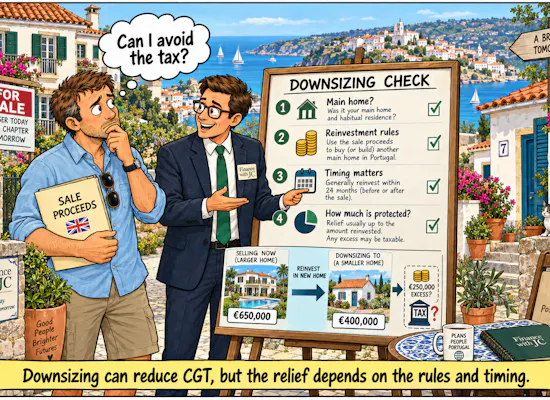
Selling while still living in the property can simplify reliefs and remove future admin, but the best choice depends on life plans and the overall balance sheet. Treat tax as one input, not the only input. If you might return, selling may create re-entry risk. A good decision balances tax, cashflow, and flexibility.
How do I know if renting is worth it financially?
Run a stress test and compare alternatives.
Calculate net cashflow after mortgage, fees, maintenance, compliance, voids, and a realistic reserve. Then compare that outcome to selling and investing the equity, including the value of reduced stress and flexibility. If the property requires ongoing subsidy, that may still be acceptable, but it should be a conscious choice. Renting works when it survives stress.
What is the cleanest approach if I feel overwhelmed by the decision?
Simplify and choose based on your life plan.
If you prioritise flexibility and low admin, selling is often the cleanest answer. If you prioritise a guaranteed return base, keeping can be right, but you must accept the cost. If you prioritise long-term investment, rent only if governance is strong and cashflow survives stress. Write the property’s job in one sentence and decide within 90 days.
What happens next
Clarify objectives and liabilities
We define what the property is for, how long you expect to be abroad, and what your likely next move is. We also map liabilities in GBP versus AED and decide how much UK exposure you want to keep.
Quantify gaps and constraints
We run cashflow models under stress and confirm mortgage, insurance, and compliance constraints. This also includes the reserve required for voids, repairs, and tax timing so the plan is resilient.
Structure and documentation alignment
We set the operational system: agent selection, reporting cadence, repair approvals, and a clean document vault. We also align estate planning, beneficiaries, and liquidity so the property does not become a family risk point.
Underwriting or implementation review
If insurance or income protection is required to support the plan, we review underwriting and claim practicality for expat life. For property implementation, we validate tenancy structure, mortgage changes, and the exit strategy.
Ongoing review triggers and cadence
We set annual reviews and trigger reviews for interest rate changes, tenant issues, relocation plans, repatriation, and major family events. Property decisions remain correct when they are reviewed, not ignored.
Conclusion
Leaving the UK with property in 2026 is a high-impact decision because it changes your entire balance sheet behaviour.
Selling creates clarity and flexibility. Keeping can preserve a home base or a long-term asset. Renting can work, but only if you treat it like a business and the numbers survive stress.
For UAE expats, the additional layer is currency and portability. Your income becomes AED and USD-linked, while your property is a leveraged GBP position. Make that exposure intentional, build reserves, and keep your plan executable for your family.
The best choice is the one you can run without stress and without drift.
Compliance note
This article is general information, not personal tax, legal, or regulated financial advice. Property, tax, mortgage, and landlord rules depend on your exact facts and can change. Take personalised advice before selling, letting, refinancing, or making residency and estate planning decisions.
References
https://www.gov.uk/renting-out-a-property/paying-tax
https://www.gov.uk/guidance/paying-tax-on-rent-to-landlords-abroad
https://www.gov.uk/tax-sell-property
https://www.gov.uk/capital-gains-tax
https://www.gov.uk/private-renting
https://www.gov.uk/tenancy-agreements-a-guide-for-landlords
https://www.gov.uk/check-energy-certificate
https://www.gov.uk/private-renting/your-landlords-safety-responsibilities
https://www.fca.org.uk/consumers/mortgages-moving-home-or-renovations
https://www.fca.org.uk/scamsmart