Start planning 12 to 18 months before you move. If possible, arrive in the UK on or after 6 April so you can use split-year treatment under the Statutory Residence Test. Receive your Saudi end-of-service gratuity and complete any taxable disposals before UK residence begins. From April 2025 the UK applies a revised residency-based regime to foreign income and gains and a Temporary Repatriation Facility exists for certain pre-6 April 2025 amounts, so map what you will bring to the UK and when. On arrival, rebuild ISAs and pensions, keep a source-of-funds file for bank due diligence, and get advice if you hold defined benefit pensions or complex offshore assets.
Last updated 25th January 2026
Who this guide is for
- UK nationals or former UK residents currently living and working in Saudi Arabia
- Professionals on fixed-term contracts considering repatriation in 2026 or 2027
- Families with gratuity, employer share plans, offshore savings and UK property to coordinate
Saudi exit snapshot: what matters before you fly
Saudi Arabia has no personal income tax on employment income for individuals. That simplicity can tempt people to leave planning late. Do not. Before you become UK-resident:
- End-of-service gratuity. In KSA it is typically paid gross. In the UK it is generally taxed as employment income. If paid while you are still non-resident for UK purposes, it is normally outside UK income tax for that year. Coordinate HR, payroll cut-off and your travel date.
- Shares and bonuses. Confirm vesting and settlement dates for RSUs, options and carried interest. If the award period spans multiple countries, your employer may allocate income between them.
- Banking. Start closing or keeping KSA accounts intentionally. Export 12 months of statements and employment letters for UK banks’ source-of-funds checks.
- Property. If you own Saudi real estate, decide whether to sell pre- or post-return. Factor local transaction costs and timing.
- Insurance. KSA employer medical cover usually ends with your final salary. Plan UK private cover for any gap until NHS registration is complete.
UK residence on return: the rules you must respect
Statutory Residence Test and split-year treatment
The SRT determines whether and when you become UK-resident in a tax year. It looks at day counting, UK work patterns and ties such as a home in the UK. If you qualify for split-year treatment, the tax year is divided into an overseas part and a UK-resident part. Only UK-period income and gains are taxed for that year.
Temporary non-residence
If you were UK-resident, left, and return within five tax years, certain income and gains realised while away can be taxed on your return. This rule is particularly relevant to flexible pension withdrawals and some capital disposals. Plan timing with this window in mind.
Post-April 2025 reforms to foreign income and gains
From 6 April 2025 the UK applies a revised residency-based framework to foreign income and gains and a Temporary Repatriation Facility exists for certain pre-6 April 2025 amounts. Do not rely on old remittance-basis heuristics. Instead, confirm your eligibility under the new rules, decide what to keep offshore, and decide what to remit under any available facility window. Always check the live Finance Act text and HMRC guidance when you set exact dates and amounts.
Seven high-impact planning moves for KSA returners
- Fix the UK arrival date early
Aim for an arrival on or after 6 April. That makes split-year treatment cleaner and simplifies record-keeping. - Time gratuity and bonuses before UK residence starts
Ask HR to pay end-of-service gratuity and any final bonus while you are still non-resident for UK purposes. Keep the payslip and payment advice in your source-of-funds file. - Sequence disposals while non-resident for UK purposes
If you plan to sell shares or non-UK funds, consider doing so before UK residence begins, subject to temporary non-residence rules. For UK residential property, remember the separate UK capital gains reporting rules can apply regardless of your residence. - Map the post-2025 regime and any TRF claim
If eligible, plan which legacy foreign income and gains to bring to the UK during the permitted window. Keep clean bank trails so UK banks can see the origin. - Prepare banking and FX
Decide in advance how you will convert SAR to GBP. Many clients use a staged approach over 3 to 9 months or a rules-based threshold to avoid emotional spot-rate decisions. - Rebuild UK tax wrappers after arrival
- ISAs: use the annual allowance for tax-free growth.
- Pensions: restart contributions within earnings limits and the annual allowance. Be mindful of the Money Purchase Annual Allowance if you have flexibly accessed pensions before.
- Update risk cover and paperwork
Arrange UK life and income protection that reflects your new earnings and liabilities, and collate residence and employment documents for HMRC and banks.
Pensions when returning from KSA
- Defined benefit safeguards. If you have safeguarded benefits over £30,000, UK law requires regulated transfer advice before any transfer proceeds.
- Access age and tax-free cash. The normal minimum pension age is 55, rising to 57 from 6 April 2028. The standard tax-free cash is capped by the Lump Sum Allowance, usually £268,275, subject to protections.
- Emergency tax on first withdrawals. First flexible withdrawals are often taxed on an emergency code. Reclaim with forms P55, P50Z or P53Z as appropriate.
- If you route via the UAE before the UK. Under the UK-UAE treaty, most private pensions are taxable only where you are resident. With an HMRC NT code and a UAE Tax Residency Certificate, UK providers can usually pay gross while you are UAE-resident. If this is your path, plan the treaty paperwork before the first payment.
Investments and portfolios
- Crystallise gains deliberately. For non-UK assets, consider sales before UK residence, subject to temporary non-residence.
- Avoid bringing avoidable UK tax problems back with you. Review offshore bonds, structured notes and private placements with a UK specialist so you do not import a chargeable gains or income issue on day one.
- Dividends and interest. Understand how the post-2025 regime will treat foreign dividends and bank interest you continue to receive after moving.
Property and UK reporting
- UK residential property. If you sell UK residential property during or shortly after your return, check whether a 60-day CGT report and payment is required.
- Overseas property. If you will dispose of Saudi property, weigh local transaction costs and UK timing. If proceeds will be remitted to the UK, include them in your TRF or post-2025 planning model where relevant.
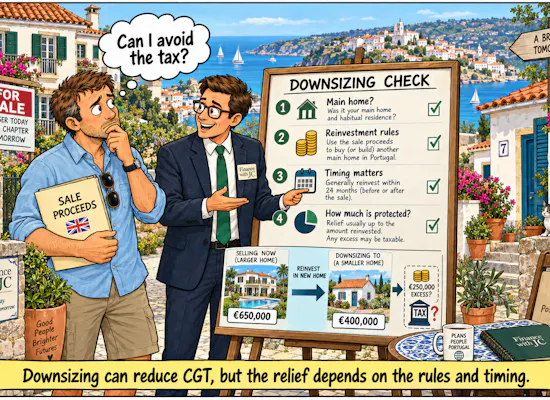
- Main residence status. If you kept a UK home, review any periods of absence, letting and elections that affect principal private residence relief.
Banking, FX and documentation
- Source-of-funds file. Create a single folder with your employment contract, final payslips, gratuity statement, 12 months of KSA bank statements and any tax residency letter. UK banks may ask for this on larger inbound transfers.
- FX policy. Choose either a staged schedule or a target-rate rule and stick to it.
- Cash buffers. Hold 6 to 12 months of UK living costs in cash after you land, then allocate the remainder according to risk and time horizon.
Insurance and protection
- Health. There may be a short gap between KSA cover ending and NHS access once you are ordinarily resident. Consider short-term private cover.
- Life and income protection. KSA-issued policies may not be optimal once UK-resident. Compare UK-based policies for jurisdiction, claims handling and cost.
- General insurance. UK home and motor require new policies dated from your return.
Case study: a senior engineer returning from Riyadh
- Profile. 43, married with two children. £220,000 salary package in KSA, SAR savings equal to £300,000, RSUs in a global employer, UK house let out.
- Plan. Arrival targeted for 6 April 2027. Gratuity and final bonus paid in February 2027 while non-resident for UK purposes. RSU sale staged across February and March to reduce market timing risk and avoid the temporary non-residence trap on return.
- On arrival. Open ISAs and restart pension contributions linked to new UK salary. Maintain a 12-month GBP cash buffer. Submit landlord records for UK property and set up quarterly estimated tax payments.
- Outcome. Clean split-year treatment, no UK tax on gratuity, ISA and pension wrappers restarted immediately, and a compliant trail for bank transfers.
Step-by-step checklist
12 to 18 months before return
- Choose a UK arrival date and map SRT split-year triggers
- Inventory assets, pensions, share plans and property
- Decide what to sell or receive before UK residence begins
6 to 9 months before
- Confirm gratuity and bonus dates with HR
- Build your source-of-funds file and export bank statements
- Review pensions and obtain regulated advice if you have safeguarded DB benefits
- Draft your FX plan and open or reactivate UK bank and ISA accounts
3 months before
- Fix completion dates for any disposals
- Line up UK accommodation, utilities and GP registration
- Finalise your model for the post-2025 rules and any TRF use
On arrival and first 90 days
- Register for UK tax and check PAYE codes
- Open ISAs and restart pensions as earnings allow
- Execute staged FX transfers
- If stopping in the UAE first, file DT-Individual with a UAE Tax Residency Certificate to obtain an NT code for UK pension payments
First UK tax year
- File a UK return applying split-year treatment where eligible
- Use any TRF window if you plan to remit legacy foreign income or gains
- Rebalance investments into UK-efficient wrappers and update your protection cover
Common mistakes to avoid
- Landing in March and complicating split-year treatment
- Letting gratuity fall due after UK residence starts
- Triggering the Money Purchase Annual Allowance accidentally before restarting UK contributions
- Missing UK 60-day CGT reporting on UK residential property
- Moving large funds to the UK without a tidy documentary trail
- Assuming pre-2025 non-dom rules still apply after your return
FAQs
When should I start planning my return from Saudi Arabia?
Twelve to eighteen months ahead is ideal. That allows you to align the arrival date with 6 April, time gratuity and disposals, and assemble documents for banks and HMRC.
Is my KSA end-of-service gratuity taxed in the UK?
Gratuity is typically tax-free in KSA but is generally taxable as employment income in the UK. If it is received before UK residence begins, it is normally outside UK income tax for that year, especially where split-year treatment applies.
Do I need to close my Saudi bank accounts before I leave?
Not legally, but it is practical. Keep statements and letters that prove the source of funds. UK banks often request this for larger transfers.
What happens to my UK pensions when I return?
You can restart contributions in line with earnings and annual allowance limits. Be careful with defined benefit transfers over £30,000 because regulated advice is mandatory, and avoid triggering the Money Purchase Annual Allowance unless you intend to.
I might live in the UAE for a year before the UK. Does that change pension tax?
While UAE-resident, the UK-UAE treaty typically allocates tax on most private pensions to the state of residence. With an HMRC NT code and a UAE Tax Residency Certificate, providers can often pay gross. Plan the paperwork before your first payment.
Book your repatriation planning call
Get a tailored, compliant plan that coordinates your UK arrival date, split-year treatment, gratuity timing, pensions, investments and FX under the post-2025 rules.
Book a free consultation with Josh Clancey to make your move home clean and tax-efficient.