What are the best 401(k) alternatives for US expats?
Top options include Solo 401(k) (if self‑employed), Traditional/Roth IRA (subject to US‑taxable earned income and Roth income limits), SEP/SIMPLE IRA (for small businesses), HSA (with an HSA‑eligible US health plan), plus taxable brokerage, REITs/real estate, IUL, and country‑specific tax‑deferred accounts. Prioritise US tax compliance (FEIE effects, PFIC rules, FATCA/FBAR) and portability.
Last updated: 25 January 2026
What you will learn
- Why expats may need 401(k) alternatives
- The main US and non‑US saving vehicles, with 2025 contribution limits
- Expat‑specific rules: FEIE, Roth income limits, PFICs, FATCA/FBAR
- How to build a portable, compliant retirement plan across borders
Why expats need 401(k) alternatives
- No access to a US employer plan after moving overseas
- Payroll off US systems; no employer match
- Plan service restrictions for non‑US addresses
- Need for currency, tax and treaty coordination with the new country
Numbers reflect current 2025 limits used in this guide. Always confirm your specific eligibility and updated thresholds before funding.
Core expat rules to know
1) US‑taxable compensation and the FEIE
- To contribute to IRAs (Traditional or Roth) you need US‑taxable compensation. Wages fully excluded under the Foreign Earned Income Exclusion (FEIE) typically do not count. Partial exclusion may allow partial contributions. Conversions don’t require compensation.
2) Roth income thresholds
- Roth IRA contributions phase out as MAGI rises; backdoor Roth strategies can work but may trigger pro‑rata tax if you hold pre‑tax IRA money.
3) PFICs (Passive Foreign Investment Companies)
- Many non‑US mutual funds/ETFs are PFICs for US tax, creating punitive taxation and heavy reporting (Form 8621). Prefer US‑domiciled funds when investing via US accounts.
4) FATCA/FBAR reporting
- US persons must report specified foreign assets (FATCA, Form 8938) and foreign accounts (FBAR, FinCEN 114) when thresholds are met—even if you owe no tax.
5) Custodian access for non‑US addresses
- Some US platforms restrict services for clients abroad. Confirm onboarding and ongoing servicing before you fund a new account.
Deep‑dive: key alternatives
Solo 401(k)
- Combine employee deferrals (Traditional or Roth) with employer contributions.
- Broad investment menus possible (including brokerage windows and, with specialist providers, alternatives).
- Keep contemporaneous records; adopt plan documents; file 5500‑EZ when required.
Best for: consultants, freelancers and side‑business owners with meaningful US‑taxable net income.
Traditional and Roth IRAs
- Traditional IRA: tax‑deferred; deductibility depends on plan coverage and MAGI.
- Roth IRA: tax‑free qualified withdrawals; no RMDs; powerful estate tool.
- Coordinate with the US–country treaty and your residency plans; consider multi‑year Roth conversions in low‑income windows.
Best for: expats wanting portability, low cost and clear US tax treatment.
SEP and SIMPLE IRAs
- SEP IRA: high employer‑side funding; simple admin but mandatory proportional contributions for employees.
- SIMPLE IRA: lower deferrals than 401(k) but easy to run; employer match/nonelective required.
Best for: small employers who prioritise simplicity over maximum deferral.
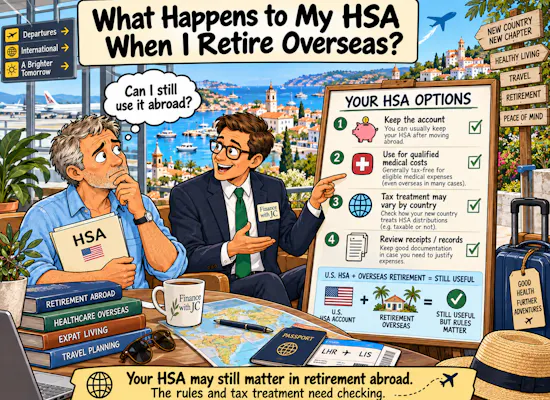
Health Savings Accounts (HSA)
- Triple tax advantage; invest for long‑term healthcare.
- Keep receipts and consider shoebox strategy for future tax‑free reimbursements.
- Contributions generally require enrollment in a US HSA‑eligible HDHP.
Best for: expats who maintain US‑compliant health coverage and want tax‑free medical funding.
Taxable brokerage, REITs and real estate
- Unlimited flexibility and access to global markets.
- Manage capital gains harvesting, dividend timing and currency exposure.
- Prefer US‑domiciled ETFs to avoid PFIC; consider REITs for income without direct property hassles.
Best for: investors who value liquidity and global diversification.
Indexed Universal Life (IUL)
- Permanent cover plus index‑linked crediting (with cap, floor, and participation rates).
- Avoid MEC status; stress‑test policy costs, lapse risk and cross‑border taxation.
Best for: HNW families seeking tax‑advantaged legacy and portable protection.
Country‑specific tax‑deferred accounts
- Local pensions/wrappers can add value where treaties and domestic rules align (e.g., UK pensions, Singapore SRS, Australian super).
- Always model US tax interaction, reporting, and currency before funding; many foreign funds are PFICs.
Best for: long‑term residents who need local sheltering alongside US accounts.
How to build a compliant, portable expat plan
- Map income sources (US vs foreign; FEIE or FTC).
- Choose the chassis (Solo 401(k)/SEP/SIMPLE vs IRA vs local wrapper).
- Set funding targets (by bracket, treaty and currency).
- Pick investments (US‑domiciled funds; avoid PFICs).
- Automate reporting (FBAR/FATCA/8621 as needed).
- Review annually (residency, treaty changes, FX exposure, fees, RMD planning).
FAQs
Can I contribute to an IRA while using the FEIE?
Only to the extent you have US‑taxable compensation; fully excluded wages typically don’t qualify.
Is a backdoor Roth possible overseas?
Yes, but watch the pro‑rata rule if you hold pre‑tax IRA balances.
Are foreign mutual funds off‑limits?
They aren’t banned, but many are PFICs—often tax‑punitive for US persons. Prefer US‑domiciled funds.
Which is better for expats: SEP, SIMPLE or Solo 401(k)?
If eligible, Solo 401(k) generally allows higher deferrals with Roth employee deferrals. SEP is simplest but employer‑only; SIMPLE has lower limits but easy setup.
Can I keep my HSA abroad?
Yes, you can spend on qualified care worldwide. Contributions usually require a US HSA‑eligible plan.
- 401(k) Rollover process - https://financewithjc.com/blog/401k-rollover-ira-process
- Rollover IRA vs Roth IRA (which chassis fits)
- Roth 401(k) → Roth IRA (five‑year rules)
Book a complimentary Expat Retirement Strategy Call.
We’ll map your residency, treaty position and income sources, then design a compliant mix of US and local accounts—Solo 401(k)/IRAs/SEP/SIMPLE/HSAs—plus an investment plan that avoids PFIC traps and manages currency risk.
You might also like
Found this article interesting? Check out similar topics below.